Start with the job the sponge must do
A private-label sponge brief should begin with the application job: base coverage, baking, cream blending, or powder setting. The same beauty-blender silhouette can hide very different foam density, pore size and edge finishing. Ask the supplier to confirm the intended wet or dry use, the target finish, and whether the sponge must survive repeated cleansing with your customers’ typical cleansers. Record the commercial unit early. Some suppliers quote pieces; others quote sets or multipacks. For PRETTY’s new sponge category, the working figure discussed publicly is MOQ 500, unit/assortment confirmed at quotation. Do not treat that figure as a mixed-style promise until the quotation states how colours and shapes are counted.
Ask for the real material story
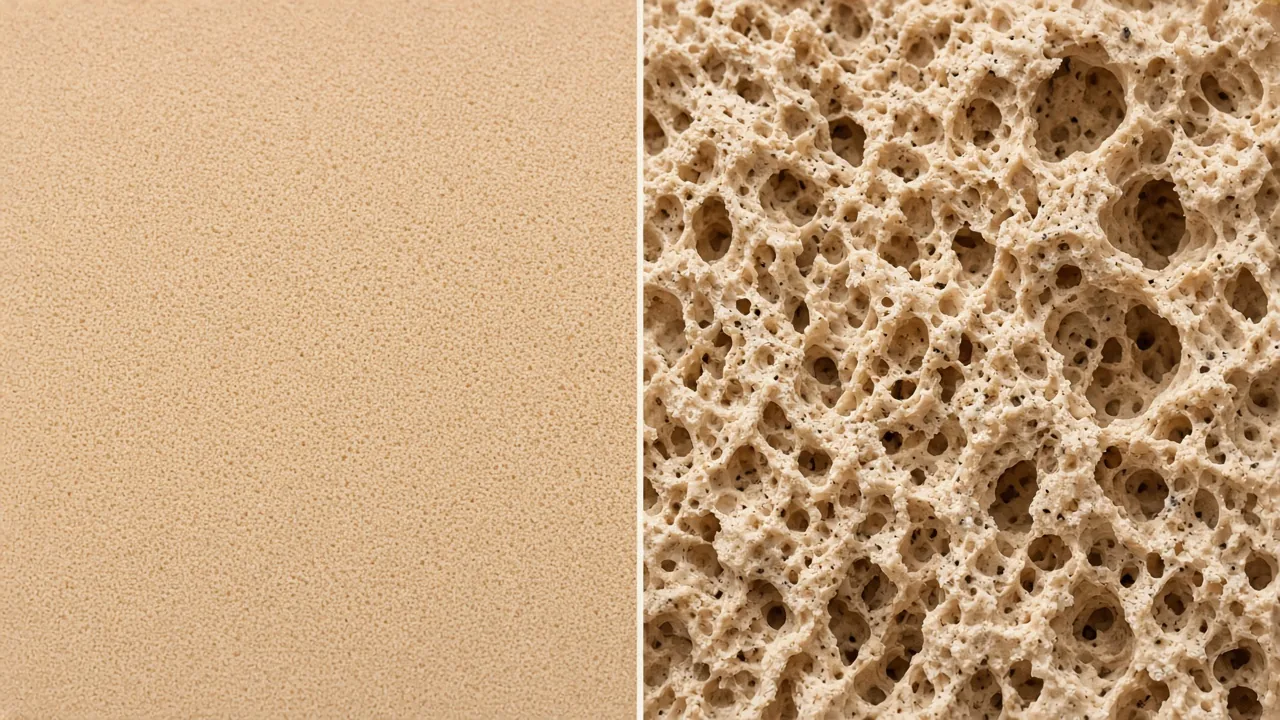
Hydrophilic polyurethane (PU) foam is the mainstream modern makeup-sponge material because it softens and expands with water. Older latex or NBR constructions still appear in lower-cost ranges and can feel firmer with less wet expansion. Latex-free is a material claim, not a marketing adjective: it should point to a named construction and, where buyers require it, supporting documentation for that construction. Do not claim vegan, antimicrobial or biodegradable benefits without evidence tied to the selected SKU. Useful specification fields include dry dimensions, dry weight, colour reference, density or softness grade, pore appearance, and the expected expansion behaviour when wet. ASTM D3574 is an industry reference family for flexible foam physical tests; it is a vocabulary for asking better questions, not proof that a supplier already runs every listed method on your SKU.
Inspect shape, edge and surface quality
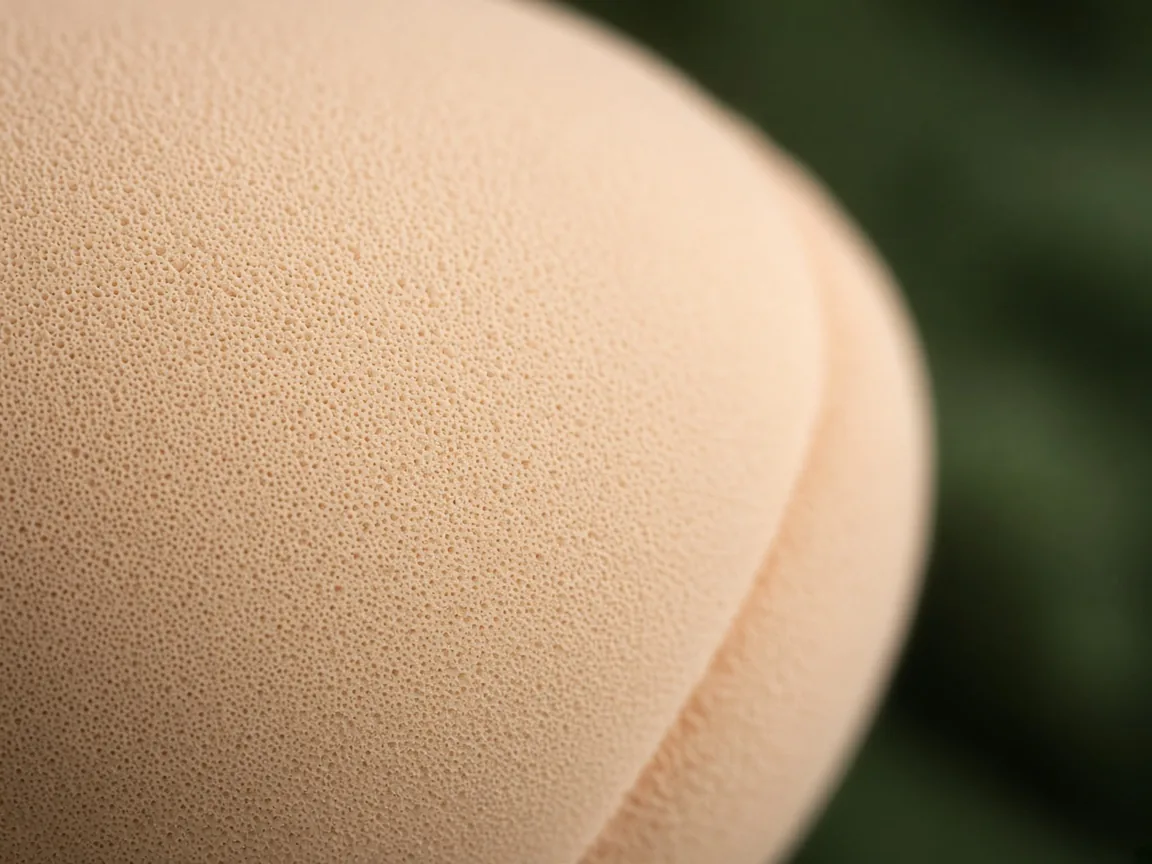
Private-label buyers usually compare teardrop/egg, flat-edge or bevelled, olive/gourd, mini and powder-puff formats. Shape consistency matters as much as the named silhouette. On first-article samples, check left-right symmetry, tip integrity, flat-face flatness, and whether cut edges are clean or frayed. Surface defects to reject or quarantine include pinholes, black spots, tears, uneven colour and rough flash. Rebound after compression should feel repeatable across the sample set. If logo printing sits on the foam itself, check placement tolerance, ink rub and whether the mark distorts after wet expansion. Packaging formats—OPP, blister card, egg case, clamshell, carton or multipack—need a physical fit check with the approved sponge, not only a dieline.
Separate supplier capability from brand claims
A capable sponge supplier can explain moulding or cutting method, washing/drying, inspection points and packing. That process story is not the same as your brand claim set. Keep retail claims conservative until the selected construction, batch evidence and destination labelling rules are confirmed. If sponges will ship with PRETTY brush sets, treat the sponge line as an adjacent category in the brief. PRETTY’s own Cangzhou factory produces makeup brushes; sponge production arrangements and quality documentation are confirmed at quotation for the selected specification. Combined packing and shipment can be discussed with the brush program when that is useful for the launch.
Compare suppliers with one brief
Send every candidate the same application job, material questions, defect list and packaging concept. Score disclosure quality and reject handling, not only a headline piece price. Ask what happens to failed lots, how colour is matched, and whether wet-expansion checks are done before or after packing. A cheaper sponge that cannot explain its material or defect path is usually the more expensive brand problem later. Write acceptance criteria in plain language a new teammate can apply without a factory tour. Photograph approved and rejected examples side by side, keep batch codes on the record, and note which checks are visual, dimensional or performance-based. When a supplier offers a catalogue substitute, re-run the same checks rather than assuming equivalence from a similar photo. If marketing needs a stronger claim later, route it through the claim register instead of editing the specification after bulk has started. For cross-border launches, list destination labelling owners early so pack artwork does not stall after the product sample is already loved. Keep commercial open points visible: undecided assortment mix, undecided secondary packaging, and undecided combined shipment should remain marked undecided until the quotation closes them. A short weekly decision log during sampling usually costs less than one rushed reprint. Finally, confirm who owns after-sales defect photos and replacement rules before the first retail delivery leaves the dock. Write acceptance criteria in plain language a new teammate can apply without a factory tour. Photograph approved and rejected examples side by side, keep batch codes on the record, and note which checks are visual, dimensional or performance-based. When a supplier offers a catalogue substitute, re-run the same checks rather than assuming equivalence from a similar photo. If marketing needs a stronger claim later, route it through the claim register instead of editing the specification after bulk has started. For cross-border launches, list destination labelling owners early so pack artwork does not stall after the product sample is already loved. Keep commercial open points visible: undecided assortment mix, undecided secondary packaging, and undecided combined shipment should remain marked undecided until the quotation closes them. A short weekly decision log during sampling usually costs less than one rushed reprint. Finally, confirm who owns after-sales defect photos and replacement rules before the first retail delivery leaves the dock. Write acceptance criteria in plain language a new teammate can apply without a factory tour. Photograph approved and rejected examples side by side, keep batch codes on the record, and note which checks are visual, dimensional or performance-based. When a supplier offers a catalogue substitute, re-run the same checks rather than assuming equivalence from a similar photo. If marketing needs a stronger claim later, route it through the claim register instead of editing the specification after bulk has started. For cross-border launches, list destination labelling owners early so pack artwork does not stall after the product sample is already loved. Keep commercial open points visible: undecided assortment mix, undecided secondary packaging, and undecided combined shipment should remain marked undecided until the quotation closes them. A short weekly decision log during sampling usually costs less than one rushed reprint. Finally, confirm who owns after-sales defect photos and replacement rules before the first retail delivery leaves the dock.
Checklist
- Application job, wet/dry use and target finish are written down
- Material family and any latex-related statement are named for the SKU
- Dry size, weight, colour and expansion behaviour are on the sample record
- Defect list covers pinholes, spots, tears, asymmetry and poor rebound
- Logo and packaging are approved on physical samples
- MOQ and assortment rules are quotation-specific; development samples are free
- Any eco or performance claim has SKU-linked evidence before artwork lock
Frequently asked questions
What quality checks matter most for private-label sponges?
Prioritise material disclosure, dimensional consistency, surface defects, wet expansion and rebound, logo durability and packed presentation. Ask how the supplier samples lots and what happens to rejected pieces.
Is hydrophilic PU the same as latex-free?
Often hydrophilic PU constructions are marketed as non-latex, but the claim still needs to match the actual material and any required documentation. Do not print latex-free from a catalogue adjective alone.
What MOQ should I plan for?
Industry public figures vary widely by customisation. For PRETTY’s sponge category, plan around MOQ 500, unit/assortment confirmed at quotation, then verify colour/shape counting on the quote.
Can sponges share a shipment with brush sets?
Combined ordering and packing can be discussed with a PRETTY brush program. Confirm the arrangement on the project quotation rather than assuming a default kit.
Sources
Continue
Related PRETTY pages
Makeup sponges · Beauty tools · Private label makeup brushes · Brush sample approval checklist
Start a project enquiry →