
How should I choose a brush for powder, liquid or cream?
Start with the formula and intended placement or blending motion, then test the head shape, exposed length, density and fibre together. Formula categories alone do not prove compatibility. The product references below provide dimensions to compare before sampling.
| Formula / task | Questions for sampling | Brush directions to explore |
|---|---|---|
| Loose or pressed powder | How much is picked up? How evenly is it released? Can colour be built gradually? | Rounded, tapered or targeted powder profiles. |
| Liquid foundation | Does the sample distribute the formula evenly? What marks remain after blending? | Flat, rounded or angled face profiles. |
| Cream blush or contour | Can placement stay controlled while edges are blended? | Angled and compact face profiles. |
| Eyeshadow / concealer / lips | Is the working edge the right size? Does it reach the intended area? | Small rounded, flat and precision profiles. |
Test with the product your customers will use.
“Liquid foundation” covers many different formulas. Viscosity, pigment and the way the product sets can change the application experience. Where possible, provide the intended formula or a representative sample rather than judging a brush only on dry skin.
Choose the application result before the brush shape.
Describe the desired coverage and motion: a light sweep, controlled placement, buffing or detailed blending. Then compare fibre, head shape, density and exposed length together. An attractive silhouette is a starting point; compatibility needs a practical review.
Powder brushes need controlled pickup and release.
Ask whether the brush loads too much product, deposits unevenly or allows gradual build-up. Review both the working surface and edge. Avoid promising that one material will work identically with every loose and pressed powder.
Include cleaning in the sample review.
Agree a cleaning method appropriate to the selected construction and review the sample afterwards. Record changes in shape, fibre condition, finish and connection. A compatibility claim should relate to the actual materials, formula and procedure evaluated.
Develop the brush and the instructions together.
A short usage explanation can help your customers understand pressure, motion and the role of each brush. We can help you select a brush mix and packaging for your formula range. Confirm performance claims with the evidence available for the final product.
From formula to a sample brief
How should you compare a foundation brush before ordering?
Compare the finish with your intended foundation, then clean and dry the sample using a method agreed for its construction. Check it again afterwards. A useful comparison records both the application result and the care routine your customers will need.
Give each sample the same starting conditions
Identify each sample and formula. Keep the amount, application area, motion and review conditions consistent, and record any differences. Review each intended formula separately if your brush will be sold for more than one use.
| Stage | Record for each sample | Decision it supports |
|---|---|---|
| Apply | Formula, amount, motion, coverage and any brush marks after blending. | Which profile gives your intended finish? |
| Clean | Agreed method, cleaning effort and visible formula residue in the head. | Is the proposed care routine practical for the intended use? |
| Dry | Drying position, conditions and elapsed time before reuse. | Does the routine suit the way your customers use and store the brush? |
| Use again | Shape, feel, connection condition and application after drying. | Keep the specification or request a named revision? |
These are points to agree for your sample review. Any cleaning or drying claim for your finished product should follow the procedure and results recorded for that specification.
Two measured starting profiles
Choose by the area and motion you want to compare. The drawings provide the starting dimensions; the sample review establishes the finish with your formula.
Which formula are you developing for?
Choose a starting brief below. You can edit it before sending your enquiry, and keep any brushes you have already selected.
Technical references & scope
Sources & scope
Industry references inform this guide; they do not certify a PRETTY product or imply a partnership. Confirm product-specific specifications and claims through your project.
Plan your next step
Ready to discuss your project?
Tell us which brushes you want to develop, how they will be used and what you would like to customise. Add the points from this guide to your enquiry so we can review the specification and sample requirements with you.
Share your formula texture, application area and desired finish with PRETTY. Choose a starting design below and include the pickup, placement and blending results you want to review in sampling.
Develop a brush for your formula →Compare foundation and concealer designsApply this to your product brief.
The wider flat foundation reference and narrower paddle reference are different starting profiles. Compare placement, brush marks and blending with the same intended formula.
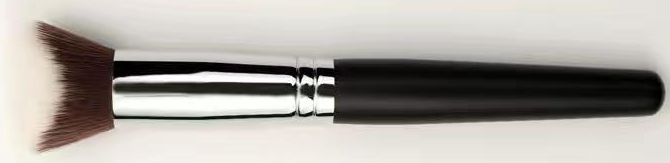
BK07 · Flat foundation brush
35 mm head width · 27 mm exposed bristles
Overall: 140 mm
Use BK07 in this brief →

BK09 · Paddle foundation brush
22 mm head width · 30 mm exposed bristles
Overall: 180 mm
Use BK09 in this brief →